This is a picture of me giving away change. Being unselfish is the core of altruistic behavior. Altruistic behavior itself is when someone is concerned for the well-being of others, even when it comes with disadvantages to themselves. Can occur in both animals and humans.
2. Autotroph
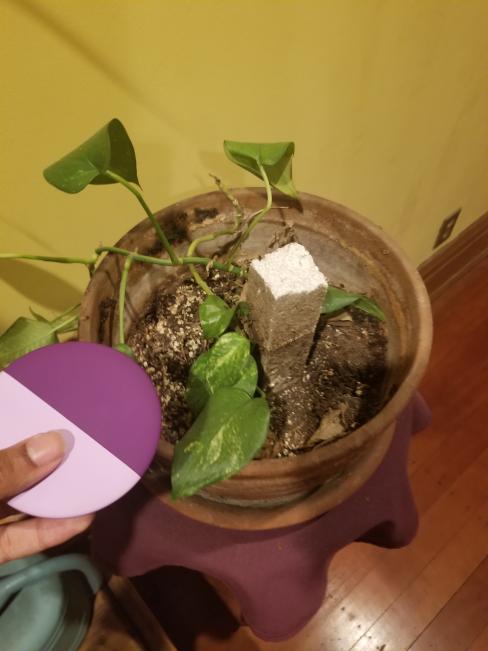
This is a picture of a plant. This plant is an example of an autotroph because its an organism that can take non-living substances and make them into food and energy.
3. Basiodiomycete
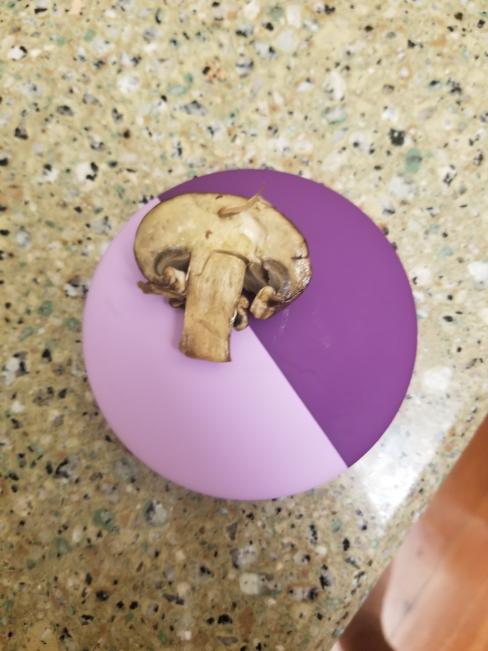
The photo depicts a mushroom on top of my proof item. A mushroom is a basiodiomycete which is a fungus with sexually produced spores on a basidium. These spores are what helps the mushroom reproduce.
4. Bilateral Symmetry
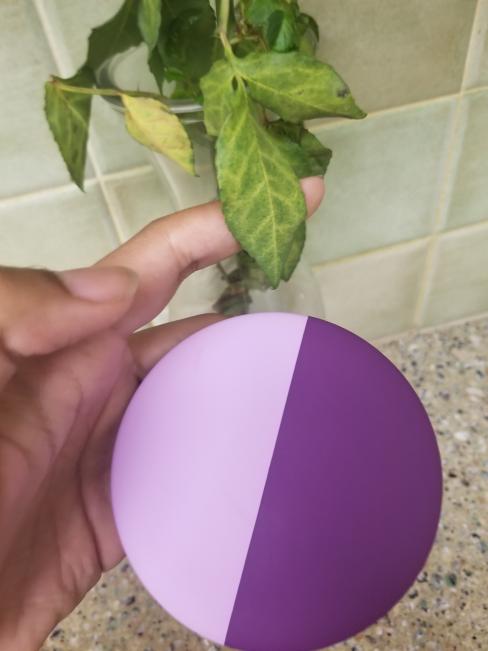
A picture depicting the leaf of a rose. The leaf represents bilateral symmetry because the organism can be divisible into equal mirror halves along the midline. Some plants and most animals have this line of symmetry.
5.C3 Plant
An example of a C3 plant is an apple. C3 plants are the most common and the most efficient at photosynthesis in cool, wet climates. The apple only uses the C3 carbon fixation pathway to convert CO2
6. Connective Tissue
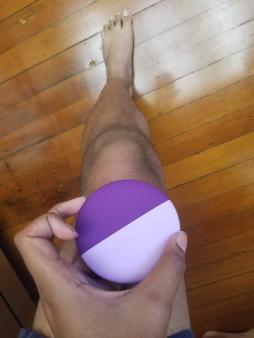
The knee is an example of connective tissue. Connective tissues connect, support, and protect various organs and connects the knee to the rest of our legs. Connective tissues can also be found around the ear or heart.
7. Endosperm
The popcorn kernals represent endosperm, and the endosperm are used as a food store for the developing plant embryo, usually containing starch.
8. Enzymes
Enzymes require water to perform just all of their tasks. Water is an integral part of an enzyme to function
9. Epithelial Tissue
This is an example of the skin on a hand and represents epithelial tissue. It’s a layer of tightly-packed cells covering the body as well as body cavities. The skin is waterproof and aids in the protection of the body from bodily harm.
10. Eukaryote
A eukaryote is a single celled or sometimes multi cellular organism whose cells have a distinct membrane bound nucleus inside it. Me, being a human, makes me an example of an eukaryotic organism.
11. Fermentation
Ketchup is a form of fermentation. Fermentation occurs in yeast cells, and a form of fermentation takes place in bacteria. The bacteria that is used in the creation of ketchup is the bacteria Lactobacillus fructivorans.
12. Genetically Modified Organism
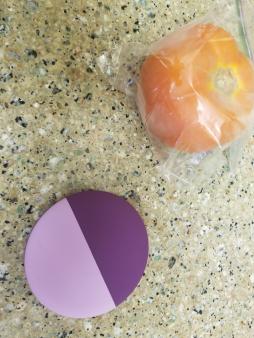
This is a picture of a tomato. Tomatoes are a great example of a genetically modified organisms. Genetically modified organisms or GMOs are made to have certain favorable traits. Tomatoes are used worldwide which is why they are GMOs to meet demand.
13. Gibberellins
This is a picture of a bag of grapes. Grapes are an example of gibberellins. Gibberellins are a group of plant hormones that promote stem elongation and positive growth. They’re used to speed up the growing process for demand.
14. Glycogen
A picture of a box of corn starch. Glycogen is a branched polymer of glucose and because of its carbohydrate is a good example of glycogen.
15. Hermaphrodite
Hermaphrodites are plants that have both male and female reproductive organs. Roses are one of these few plants which houses both organs.
16. Homeostasis
This is a picture of me drinking water. Homeostasis is the ability to maintain a constant internal body temperature despite changes in our environment. So, even though I’m drinking cold water my internal body temperature stays the same.
17. Hydrophilic
Hydrophilic, or having an affinity for water; the capacity of interacting with water through the process of hydrogen bonding. Because of this, sugar is a hydrophilic substance.
18. Hydrophobic
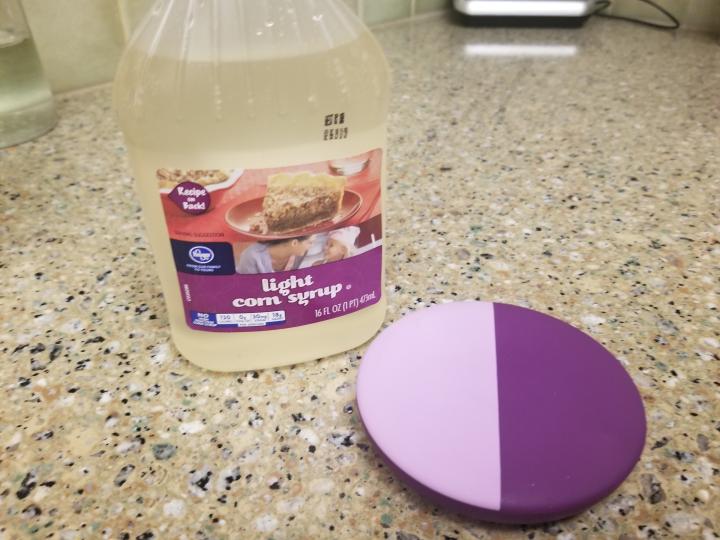
This is a picture of corn syrup. Corn syrup is an example of a hydrophobic liquid. A liquid that is hydrophobic means that it doesn’t mix well with water or will not dissolve.
19. Lipid used for energy storage
An example of a lipid for energy storage is butter. A lipid is a fatty/waxy organic compound this is insoluble. Once broken down in the body, the energy can be used when the body needs it.
20. Meristem
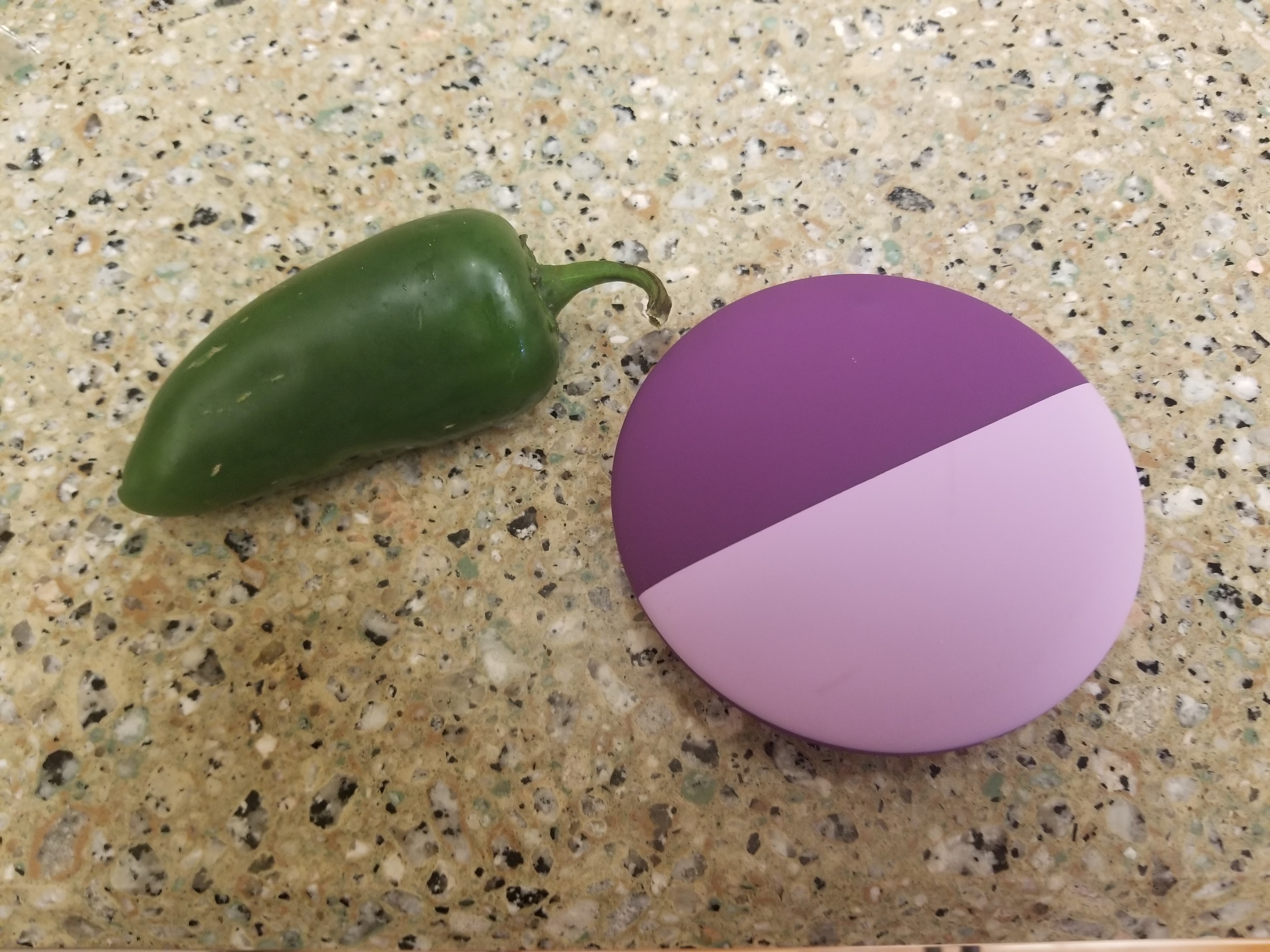
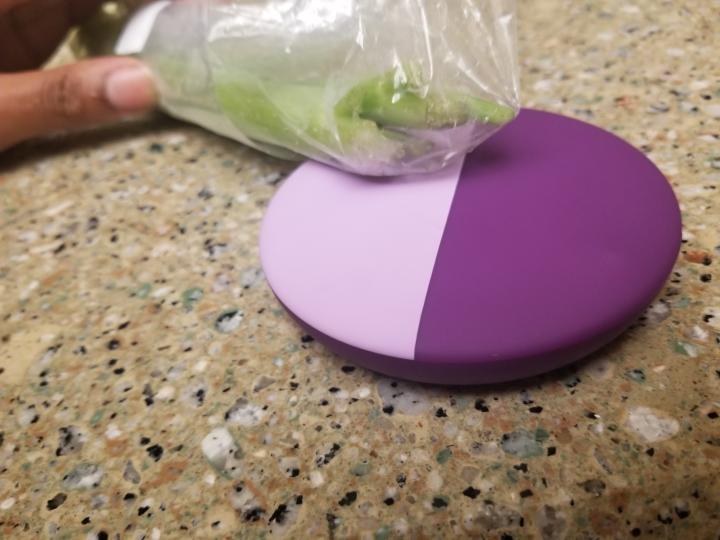
This is a picture of a green pepper. The meristem of a green pepper is a region of plant tissue found at the growing tips of roots along with shoots.
21. Phloem
This picture depicts the stem of a plant. This stem is a good example of phloem. Phloem is the vascular tissue that conducts sugars and other products downward from the leaves.
22. Pollen
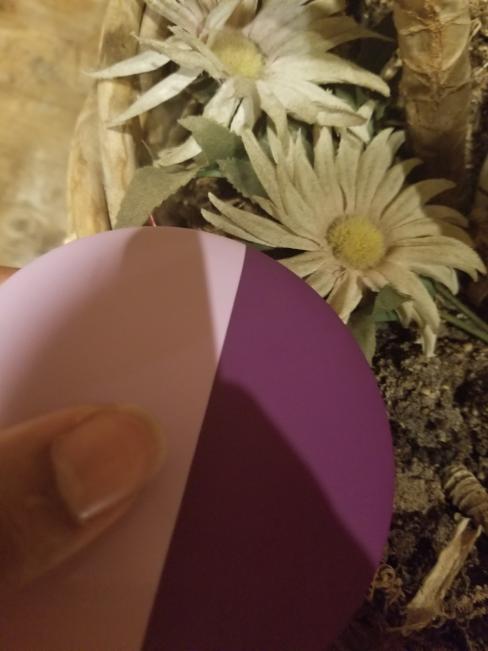
The picture here depicts a white flower with pollen in the middle. This pollen is located the flower’s stamen and is a yellow powder to fertilize by delivering male gametes to the ovule of the plant. Pollen is needed to in the process in creating seeds.
23. Predation
This is a picture of a spider. Spiders are an example of predition because it’s an insect that preys on a weaker organism for food and energy. The spider can do this by capturing smaller insects in its web.
24. Taxis
The picture here shows me reaching for the light. This attraction to the light represents taxis which is the movement of an organism due to an external stimulus. Movement can either be towards or away.
25. Xylem
This is a picture of celery. Celery is an example of xylem. Xylem is the vascular tissue in plants that moves dissolved nutrients upward from the root and helps to form the woodiness in the stem. Explaining the snap sound when breaking apart celery.












 Evan's Biology Photo Blog